Internet / ScoutRoo journal
5G home internet or fiber: the better choice starts at your address
The fastest plan on a comparison page is not always the best connection for your home. Fiber and 5G home internet reach your router in different ways. Before comparing prices, make sure both options can actually be ordered at your street address. A ZIP code narrows the field; it cannot settle availability at a particular unit or house.
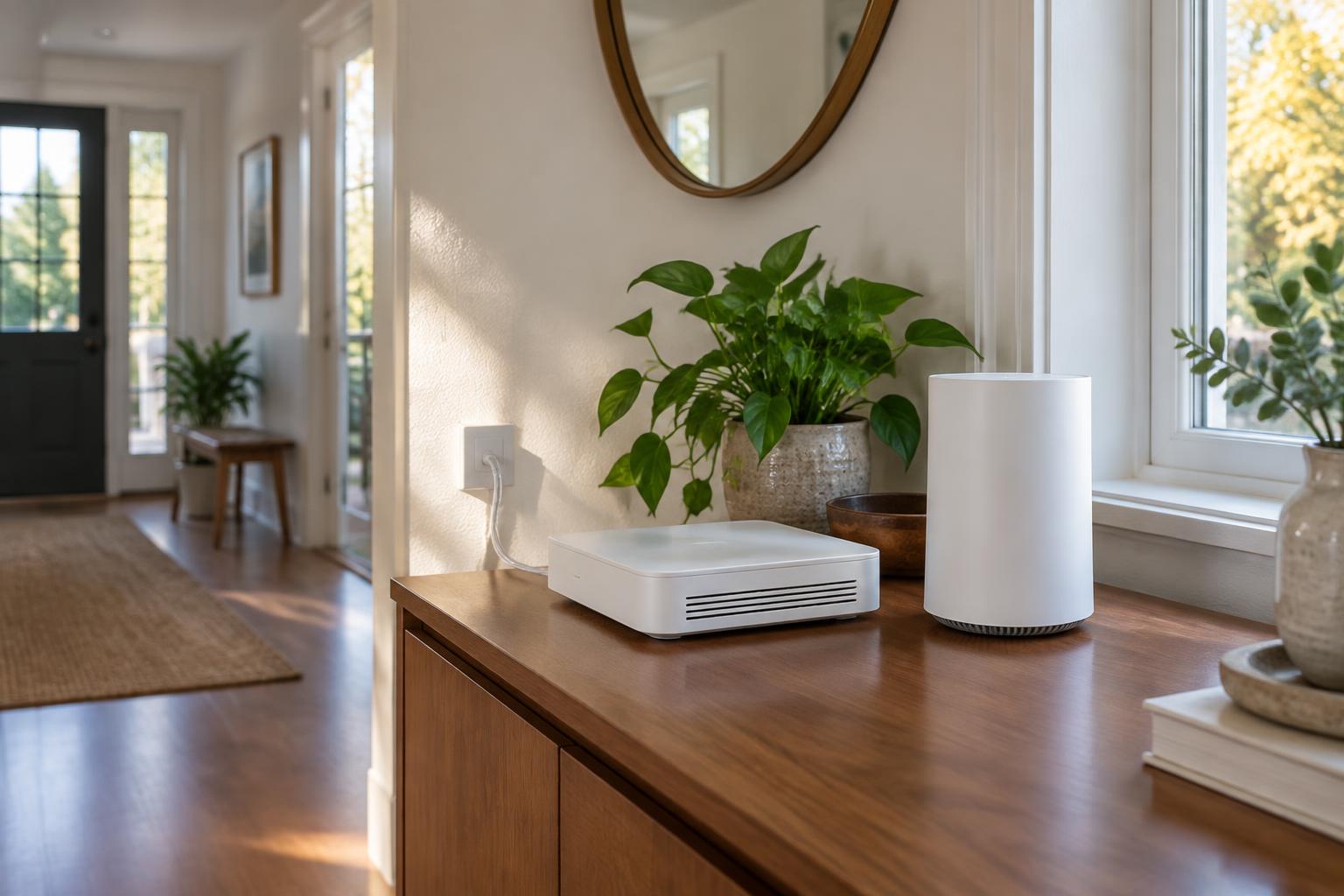
The essentials
- Fiber uses a physical line; 5G home internet connects a home gateway to a cellular network. Neither description proves availability at your address.
- Compare upload speed, busy-hour performance, total monthly cost, and installation — not only the biggest advertised download number.
- The provider confirms the final availability, price, fees, and terms for your specific address.
First, ask whether the address really qualifies
Start with a ZIP search to discover potential providers, then enter your full service address on each provider's own order page. An apartment building may have a fiber network on the block but not in every unit. A 5G carrier may cover the neighborhood on a phone while restricting its home-internet service to certain addresses or capacity zones. Phone coverage and home-internet eligibility are not the same question.
The FCC National Broadband Map offers another address-level check. Its availability listings are reported by providers and can be challenged if they are wrong; they do not tell you what a plan costs or how it performs inside your home. The provider still confirms the order, installation, and final terms.
Which connection fits the way you use the internet?
Fiber is especially worth a close look when your household regularly sends large files, backs up media, or has multiple people on video calls. Ask for the plan's upload figure: a high download number by itself does not answer that question. A wired connection can also avoid the radio-signal placement problem of a cellular gateway, although your in-home Wi-Fi and provider's local network can still affect the experience.
5G home internet can be a compelling alternative when its address-specific offer is simpler or less expensive and its performance meets your household's needs. Its gateway may be easier to set up than a new wired installation, but placement matters. Test the connection where you will actually use it, particularly during busy evening hours. Don't infer performance from the signal bars on your phone; the home gateway, network conditions, and plan can differ.
Neither connection is a universal winner. A fiber offer with an inconvenient installation schedule might be a poor fit for someone who needs service this week. A 5G plan may be a great value for a smaller household but feel inconsistent in a crowded location. Compare the real plans available to you instead of treating either technology as a brand promise.
Make a two-column comparison before you switch
For each address-confirmed offer, write down its regular price, how long any introductory price lasts, equipment and installation charges, download and upload speeds, data terms, and cancellation or return terms. The FCC's broadband labels are designed to make plan disclosures easier to compare. Ask the provider about any fee or condition you cannot find on the label.
If you already have working service, avoid canceling it before the new connection is installed or tested. Put both connections through the same few tasks: an evening video call, a stream on the main TV, and a large upload if that matters to your household. A single speed test on Wi-Fi is not a complete verdict on either network.
- Confirm availability at the full service address with each provider.
- Compare the regular price and any extra charges, not just the introductory rate.
- Choose the address-confirmed offer that meets your household's upload, consistency, and budget needs over the full price period.
Good to know
Common questions
Is 5G home internet the same as phone 5G?
No. It uses a cellular network but is sold as service for a fixed home address, with its own gateway, eligibility, and plan terms.
Does fiber always cost more?
No. Prices vary by location, provider, plan, and promotion. Compare the regular price and fees of the specific offers at your address.
Can a ZIP search prove fiber is installed at my home?
No. It is a starting point. Confirm your service address and installation directly with the provider.
Sources & further reading
- FCC National Broadband Map
- FCC broadband labels
- ScoutRoo’s fiber vs. cable guide
- T-Mobile’s separate 5G and fiber services
Sources checked October 4, 2026. Provider details can change; confirm current terms directly.
ScoutRoo editorial guidance. Plans, fees, and availability vary by address and provider. Confirm current offers and final terms directly with the provider before ordering.